

- BASEBALL AWARDS
- 2026 AWARDS
- 5 STAR BASEBALL RINGS
- BASEBALL ALL-STAR AWARDS
- BASEBALL BALL RINGS
- BASEBALL BATTER RING
- BASEBALL BELTS
- BASEBALL BRACELETS
- COLORED BASEBALL RINGS
- CUSTOMIZABLE BASEBALL AWARDS
- DELUXE BASEBALL RINGS
- DIAMOND SERIES BASEBALL RINGS
- DISTRICT BASEBALL RINGS
- HOME PLATE BASEBALL RINGS
- HOME RUN DERBY RINGS
- BASEBALL TURNOVER CHAINS
- JUMBO BASEBALL RINGS
- BASEBALL LEAGUE RINGS
- BASEBALL MEDALS
- BASEBALL MVP AWARDS
- BASEBALL NECKLACES
- BASEBALL PARTICIPATION AWARDS
- BASEBALL PLACEMENT AWARDS
- PONY BASEBALL AWARDS
- SEASONAL
- BASEBALL SLUGGER RING
- BASEBALL SPINNER RINGS
- BASEBALL STATE RINGS
- SQUARE BASEBALL RINGS
- BASEBALL TEAM AWARDS
- T-BALL
- TEXAS RINGS
- BASEBALL WORLD SERIES RINGS
- BASKETBALL AWARDS
- CHEER AWARDS
- FOOTBALL AWARDS
- 5 STAR FOOTBALL RINGS
- FOOTBALL RINGS
- 2026 AWARDS
- CUSTOMIZABLE FOOTBALL AWARDS
- FANTASY FOOTBALL AWARDS
- FOOTBALL ALL-STAR AWARDS
- FLAG FOOTBALL AWARDS
- FOOTBALL BELTS
- FOOTBALL MEDALS
- FOOTBALL MVP AWARDS
- FOOTBALL NECKLACES
- FOOTBALL PARTICIPATION AWARDS
- FOOTBALL PLACEMENT AWARDS
- SEASONAL
- FOOTBALL TURNOVER CHAINS
- SOCCER AWARDS
- SOFTBALL AWARDS
- 2026 AWARDS
- 5 STAR SOFTBALL RINGS
- SOFTBALL ALL STAR RINGS
- CUSTOMIZABLE SOFTBALL AWARDS
- SOFTBALL RINGS
- SOFTBALL BATTER RINGS
- SOFTBALL BELTS
- SOFTBALL BRACELETS
- BIG BANG SOFTBALL RINGS
- COLORED SOFTBALL RINGS
- DELUXE SOFTBALL RINGS
- DIAMOND SERIES SOFTBALL RINGS
- DISTRICT SOFTBALL RINGS
- HOME PLATE SOFTBALL AWARDS
- SOFTBALL HOME RUN DERBY
- JUMBO SOFTBALL RINGS
- SOFTBALL LEAGUE RINGS
- MEDALS
- MVP
- NECKLACES
- SOFTBALL PARTICIPATION AWARDS
- SOFTBALL PLACEMENT AWARDS
- PONY SOFTBALL RINGS
- SEASONAL
- SLUGGER RING
- SOFTBALL SPINNER RINGS
- SQUARE SOFTBALL RINGS
- SOFTBALL TEAM AWARDS
- T-BALL
- TEXAS RINGS
- SOFTBALL TURNOVER CHAINS
- FASA SOFTBALL AWARDS
- SOFTBALL WORLD SERIES RINGS
- USA SOFTBALL AWARDS
- USFA
- VOLLEYBALL AWARDS
- OTHER SPORTS
Gold Star Medals and 1st Place Medals: How to Use Them in Youth Sports

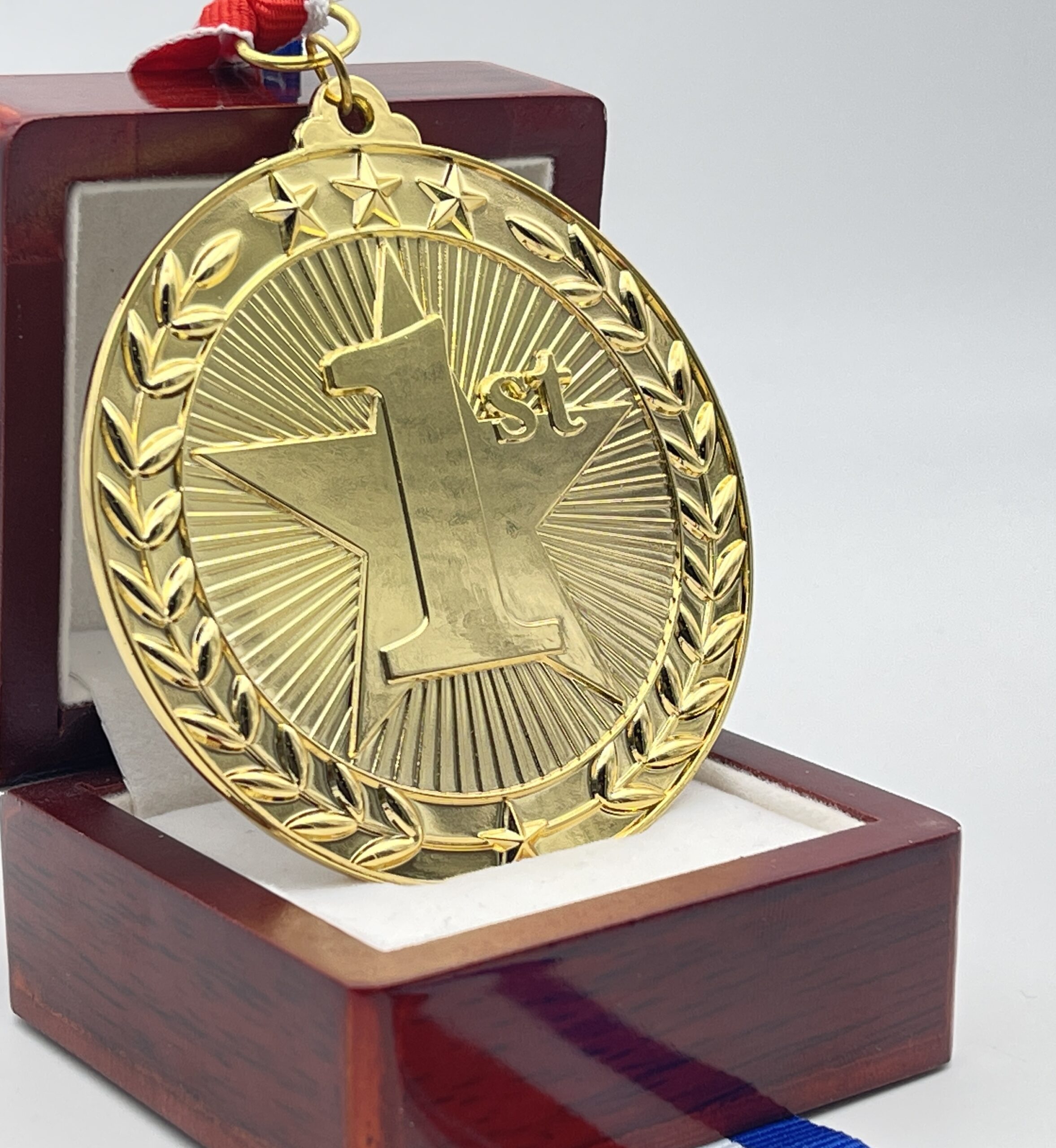
Every coach and league director inevitably faces the same dilemma at the end of a season: you want every kid to walk away feeling genuinely seen, but you also don’t want to hollow out the meaning of a hard-earned championship. Hand out too many identical awards, and nothing feels special. Give recognition only to the tournament winners, and you risk losing the kids who showed up to every single practice but never stood on the podium.
The answer isn’t choosing one approach over the other. Both matter. Using gold star medals for effort-based recognition alongside a 1st place medal for competitive milestones gives you a complete awards strategy, one that builds character in younger athletes while still honoring the teams that clawed their way to the top of the bracket. These two award types serve different purposes, and when you deploy them with intention, both carry real weight.
The Psychology of Youth Sports Recognition: Achievement vs. Effort
Children don’t process competitive rankings the same way across age groups, and that gap matters when you’re designing your awards program. Kids under roughly eight years old are still building their foundational relationship with sport: what it feels like to be part of a team, to practice something difficult, and to improve. At that stage, recognition tied to effort and participation lands far more meaningfully than a placement award they can’t yet fully contextualize. Older athletes, particularly those ten and above, have developed enough competitive awareness to genuinely value where they finished relative to their peers, and they notice when that distinction is treated seriously. The Aspen Institute Project Play has documented extensively how positive early experiences in youth sports directly shape long-term athletic engagement, and the quality of recognition a child receives is woven into that experience. Coaches who calibrate their awards to match where their players are developmentally tend to see stronger retention and more motivated athletes season over season. An antique gold 1st place medal presented at the right moment to a player who has genuinely earned a competitive distinction carries a very different emotional charge than the same award handed out randomly.
There’s also a tactile dimension to this that is easy to underestimate. Weight matters. Choosing the right medal is like picking out the perfect glove: it has to have some weight to it, and it has to feel right in your hand. A child who receives a heavy, metallic award feels the weight of it in their hand and understands, almost instinctively, that someone took their achievement seriously. Contrast that with a lightweight plastic trophy that rattles when you shake it; those tend to end up in a junk drawer within a month, and the kids know it too. A well-made physical award becomes a long-term artifact of a season: the teamwork, the early-morning practices, and the friendships that formed in the dugout or on the sideline. When you order a quality 1st place medal for your tournament champions, you’re not just giving them hardware: you’re giving them something they’ll still have on a shelf years from now.
How to Use Gold Star Medals to Reward Effort and Sportsmanship
The backlash against participation trophies is real, and it is largely deserved when those awards are generic and unearned. The fix isn’t to eliminate effort-based recognition; it’s to make those awards specific enough that they feel genuinely merited. Details matter. When a gold star medal is tied to a concrete, observable behavior, it carries the same integrity as a competitive placement award. A child who dove headfirst for a ground ball in the final inning, or who spent three weeks helping a struggling teammate with their footwork, has earned something. Naming that specific act during the ceremony is what separates a meaningful award from a consolation prize. The National Alliance for Youth Sports highlights that positive coaching frameworks, ones that recognize character alongside athletic performance, produce athletes who are more coachable, more resilient, and more likely to stay in the sport through adolescence.
Concrete categories make this approach easy to implement at your end-of-season ceremony:
- The Hustle Award: For the player who never stopped running and brought full effort to every single play, regardless of the score.
- Most Improved Player: Celebrating the athlete who showed the greatest technical and personal growth from opening day to the final game.
- The Sportsmanship Star: Awarded to the player who consistently supported teammates, respected officials, and competed with integrity even when the calls didn’t go their way.
- The Team-First Award: For the player who routinely put the group’s needs ahead of individual recognition, the one who set the screen, took the cutoff throw, or stayed late to help break down the equipment.
When you’re ready to order medals for your whole roster, our team at Discount Sports Rings makes the process simple. We offer no minimum order requirements, so whether you’re outfitting a single team or an entire recreational league, you’ll find high-quality, budget-friendly pricing across every sport. Our soccer champion medal is a strong example of the kind of substantial, professional-grade award that holds up to the moment and to years of being kept in a keepsake box.
Implementing 1st Place Medals for Competitive Milestones
Tournament championships, league finals, and divisional playoffs are the natural settings for a 1st place medal. These are the moments where the competitive stakes have been clearly established over weeks or months, and the award carries the full narrative weight of everything that preceded it. One ceremony detail that consistently boosts the energy: applaud the runner-up teams before the champions receive their medals. Bringing the second-place squad forward first, acknowledging their season with genuine enthusiasm, sets a tone of mutual respect that makes the champion’s moment feel earned rather than divisive. Kids on the losing side of a close final remember how they were treated at that ceremony, and so do their parents.
Quality matters at this level in a way that is hard to overstate. Quality tells a story. A flimsy, lightweight medal handed to a team that just won a 12-week tournament tells those kids, without a word, that their victory wasn’t worth much. At Discount Sports Rings, we are a family-owned business in Santa Fe, Texas, and we have spent years helping coaches and league directors find awards that match the gravity of the moment without straining a volunteer-run budget. We offer a fast turnaround because kids shouldn’t have to wait months to show off their win. From our family to your team, we want the medal your champions hold up in that team photo to look and feel like the real thing, which makes our players feel like pros. John S., one of our customers, put it plainly: “Ordered some for my son’s AAU basketball team and my daughter’s softball team. They are bigger than I expected but solid and well made. Can’t wait to see the kids’ reactions to them.”
A few practical tips for running a ceremony that players and parents will genuinely remember:
- Keep it fast-paced: Long speeches lose young athletes quickly. Move through the program with energy, and save extended remarks for the post-ceremony gathering.
- Highlight a specific moment for each child: When presenting gold star medals, name the exact play, practice, or interaction that earned the award. Specificity is what makes the recognition feel real.
- Involve the parents: Cue them to have their cameras ready before each presentation. The photo from that moment often outlasts the medal itself in a family’s memory.
- End on a high note: Close with a team cheer, a group photo, or a short activity that sends everyone home with energy rather than winding down into a slow exit.
Age-Appropriate Recognition Strategies for Youth Leagues
Matching your awards strategy to the developmental stage of your athletes isn’t just good psychology; it’s the difference between a recognition program that keeps kids coming back and one that quietly contributes to dropout. For the youngest players, roughly ages four through six, the entire focus should sit on participation and effort. Keep it fun. Gold star medals at this stage build a foundational sense that showing up and trying hard is worth celebrating, which lays the groundwork for a healthy competitive mindset later. The goal isn’t to shield them from competition; it’s to give them a positive emotional anchor to sport before the competitive stakes feel personal.
In the middle youth range, ages seven through ten, a blended approach works well. These athletes are beginning to track standings, notice who scored the most goals, and understand what it means to win a bracket. Introducing competitive placement awards alongside effort recognition at this stage, rather than waiting until they’re older, helps them develop a mature relationship with both winning and losing. For athletes eleven and up, performance-based awards like a 1st place medal or championship rings for youth leagues carry real motivational weight, though sportsmanship and leadership recognition should remain part of the mix. There’s a well-documented pattern of youth sports dropout through early adolescence, and the programs that retain the most athletes tend to be the ones where every player, not just the top performers, feels like their contribution to the team was genuinely noticed.
If you want your awards to reflect your league’s identity rather than looking like they came off a generic shelf, customization is the move. Discount Sports Rings offers customizable awards: rings and medals with engravable sides that can carry your league’s name, logo, and colors. We work with you to ensure the finished customizable team awards are exactly what you envisioned when you first placed the order. For personalized bulk pricing and stress-free ordering, text Mike Cothern directly at 409-939-0762. He’ll walk you through the options and get you a quote that works for your roster size and budget.
Balancing Participation and Competitive Achievement
Getting both award types to retain their meaning in the same program requires a few intentional choices: Plan ahead.
- Differentiate the design: Use distinct sizes, finishes, or styles, such as gold star medals for effort recognition and larger, heavier medals for tournament placement, so players and parents can immediately read the difference.
- Clarify the criteria upfront: At the season’s first parent meeting, explain what each award represents and how it’s earned. Transparency at the start prevents confusion at the ceremony.
- Ensure that the presentation of effort-based awards receives the same vocal enthusiasm and public praise as the championship awards. The energy you bring to handing a kid a Hustle Award signals to the whole room whether that recognition is real or ceremonial.
- Avoid blanket awards: Personalize each medal or certificate to reflect a specific contribution. A player’s name and a named category on the award transform it from a generic token into something worth keeping.
Ordering Bulk Medals and Awards for Your Entire League
Volunteer coaches and league directors don’t have time for complicated buying processes, and they shouldn’t need a large budget to give their athletes something worth keeping. Discount Sports Rings operates out of 6603 Bar O Ranch Rd and ships across the United States, with tiered pricing designed to reward leagues that order in volume.
Our pricing for rings is structured directly to support local leagues: 1-19 Rings are $8.50; 20-99 Rings are $7.50; 100-199 Rings are $7.25; 200-299 Rings are $7.00; 300-500 Rings are $6.50; Xtra Bulk 500-999 Rings are $6.00; and bulk orders of 1,000 or more are $5.50 per ring. The more athletes you’re celebrating, the more your per-unit cost drops, which means a well-funded league and a shoestring-budget recreational program can both walk away with awards that look and feel professional.
Coaches who’ve ordered with us tend to come back. Elizabeth M. noted: “Quickness on processing orders! They only take seconds to respond. I can always count on Discount Rings!!” Rick Y. from RBI (Rec Baseball Innovations) added: “This is the only ring company we need at RBI (Rec Baseball Innovations). Always fast shipping, and we love that we are giving our business to another Texas-based company.” From the final buzzer to your doorstep, we’ve got your team covered.
Frequently Asked Questions About Youth Sports Medals
What color are 1st, 2nd, and 3rd place medals?
Traditionally, first place is gold, second place is silver, and third place is bronze. It is a classic system. These colors give players an immediate, universally understood visual shorthand for competitive standing, which is part of why the tradition has held across virtually every sport and age group.
What medal is first place?
The gold medal is awarded for first place. It represents the highest level of achievement in a tournament or league competition, and its color distinction is recognized by athletes from the earliest age levels through elite competition.
Is it better to use 1st place medals or 1st place ribbons?
First place ribbons are lightweight and cost-effective, which makes them a practical option for very large events with tight budgets. A heavy, metallic 1st place medal, though, offers something a ribbon can’t: it has physical presence. Kids feel the weight of it, and that tactile quality reinforces the significance of the achievement. Medals are also more durable over time; a ribbon can crease, fade, or get lost in a drawer, while a well-made medal tends to stay intact for years.
How can coaches prevent the “everyone gets a trophy” backlash?
The most effective approach is shifting from generic participation awards to targeted gold star medals tied to specific, observable behaviors: sportsmanship, consistent effort, measurable technical improvement, or team-first actions. When every award reflects something the recipient actually did, the recognition system as a whole gains credibility. Players and parents both notice the difference between a medal that names a real achievement and one that was handed out because everyone got one.
Can we customize medals with our youth league’s logo?
Yes. Custom awards can be personalized with your league’s logo, colors, and specific engraving to make each achievement feel distinct and connected to your program’s identity.
Celebrating a child’s hard work and dedication is one of the most rewarding parts of running a youth sports program, and getting the awards right is a bigger part of that than it might seem. A well-chosen medal, presented at the right moment with the right words, becomes a physical anchor for a season’s worth of growth, grit, and connection. Whether you’re outfitting a single team or managing awards for an entire multi-sport league, the goal is the same: make every athlete feel like their contribution mattered, and make the champions feel like champions. From our family to your team, let’s celebrate their hard work and create memories that will last a lifetime.
Browse our full catalog of league awards to find the right fit for your program, from gold star medals for your youngest players to championship hardware for your tournament winners.