

- BASEBALL AWARDS
- 2026 AWARDS
- 5 STAR BASEBALL RINGS
- BASEBALL ALL-STAR AWARDS
- BASEBALL BALL RINGS
- BASEBALL BATTER RING
- BASEBALL BELTS
- BASEBALL BRACELETS
- COLORED BASEBALL RINGS
- CUSTOMIZABLE BASEBALL AWARDS
- DELUXE BASEBALL RINGS
- DIAMOND SERIES BASEBALL RINGS
- DISTRICT BASEBALL RINGS
- HOME PLATE BASEBALL RINGS
- HOME RUN DERBY RINGS
- BASEBALL TURNOVER CHAINS
- JUMBO BASEBALL RINGS
- BASEBALL LEAGUE RINGS
- BASEBALL MEDALS
- BASEBALL MVP AWARDS
- BASEBALL NECKLACES
- BASEBALL PARTICIPATION AWARDS
- BASEBALL PLACEMENT AWARDS
- PONY BASEBALL AWARDS
- SEASONAL
- BASEBALL SLUGGER RING
- BASEBALL SPINNER RINGS
- BASEBALL STATE RINGS
- SQUARE BASEBALL RINGS
- BASEBALL TEAM AWARDS
- T-BALL
- TEXAS RINGS
- BASEBALL WORLD SERIES RINGS
- BASKETBALL AWARDS
- CHEER AWARDS
- FOOTBALL AWARDS
- 5 STAR FOOTBALL RINGS
- FOOTBALL RINGS
- 2026 AWARDS
- CUSTOMIZABLE FOOTBALL AWARDS
- FANTASY FOOTBALL AWARDS
- FOOTBALL ALL-STAR AWARDS
- FLAG FOOTBALL AWARDS
- FOOTBALL BELTS
- FOOTBALL MEDALS
- FOOTBALL MVP AWARDS
- FOOTBALL NECKLACES
- FOOTBALL PARTICIPATION AWARDS
- FOOTBALL PLACEMENT AWARDS
- SEASONAL
- FOOTBALL TURNOVER CHAINS
- SOCCER AWARDS
- SOFTBALL AWARDS
- 2026 AWARDS
- 5 STAR SOFTBALL RINGS
- SOFTBALL ALL STAR RINGS
- CUSTOMIZABLE SOFTBALL AWARDS
- SOFTBALL RINGS
- SOFTBALL BATTER RINGS
- SOFTBALL BELTS
- SOFTBALL BRACELETS
- BIG BANG SOFTBALL RINGS
- COLORED SOFTBALL RINGS
- DELUXE SOFTBALL RINGS
- DIAMOND SERIES SOFTBALL RINGS
- DISTRICT SOFTBALL RINGS
- HOME PLATE SOFTBALL AWARDS
- SOFTBALL HOME RUN DERBY
- JUMBO SOFTBALL RINGS
- SOFTBALL LEAGUE RINGS
- MEDALS
- MVP
- NECKLACES
- SOFTBALL PARTICIPATION AWARDS
- SOFTBALL PLACEMENT AWARDS
- PONY SOFTBALL RINGS
- SEASONAL
- SLUGGER RING
- SOFTBALL SPINNER RINGS
- SQUARE SOFTBALL RINGS
- SOFTBALL TEAM AWARDS
- T-BALL
- TEXAS RINGS
- SOFTBALL TURNOVER CHAINS
- FASA SOFTBALL AWARDS
- SOFTBALL WORLD SERIES RINGS
- USA SOFTBALL AWARDS
- USFA
- VOLLEYBALL AWARDS
- OTHER SPORTS
Why Every Placement Deserves Its Own Award: The Power of Second and Third Place Medals

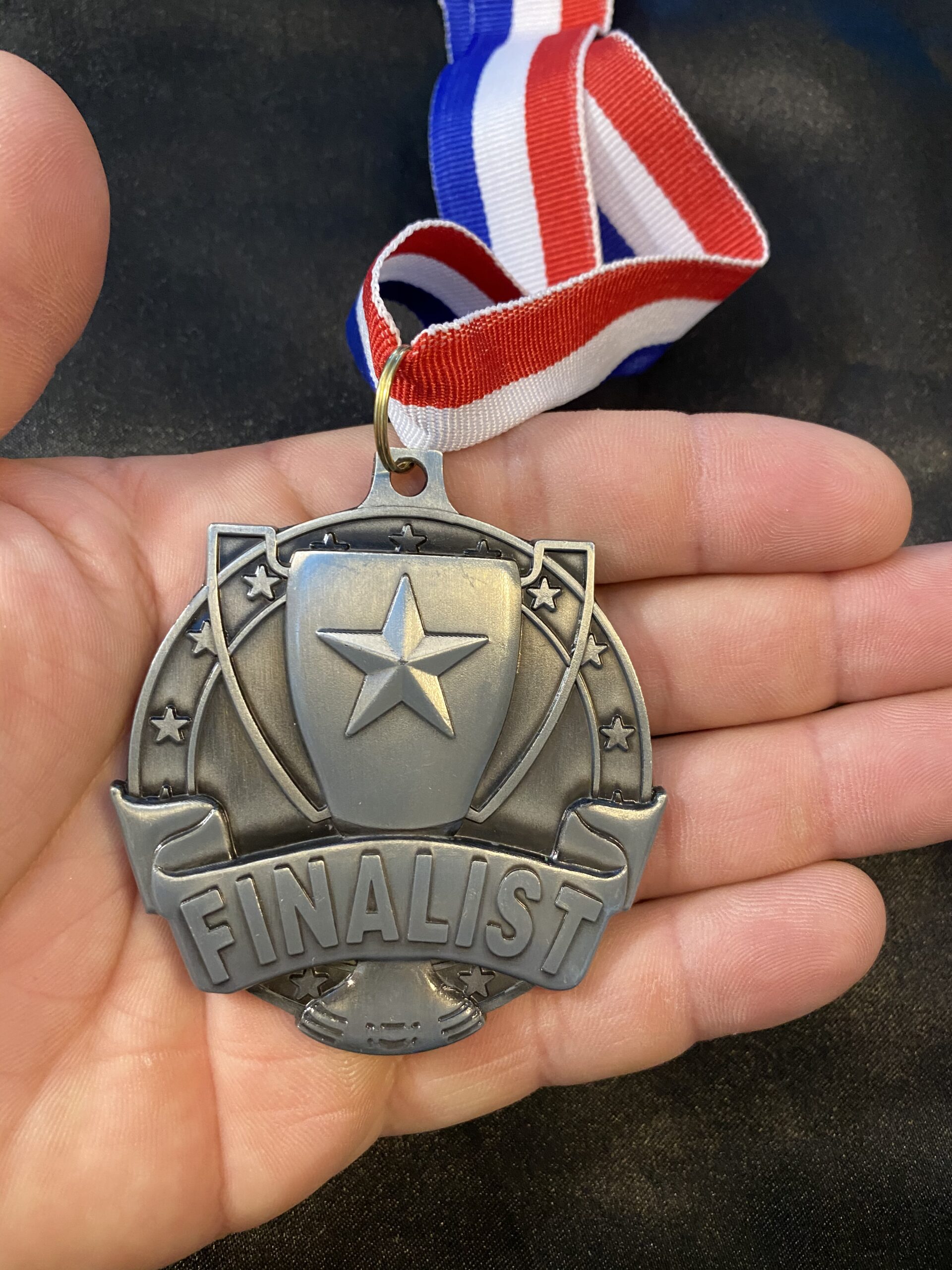
Your players just fought through elimination rounds, overtime periods, and pressure-packed moments. When the final whistle blows, only one team walks away with the top spot. But those runners-up did not just participate; they battled. They earned their spot. A 2nd place medal or a bronze finish is a hard-earned credential that shows exactly how far they climbed.
For tournament directors and league organizers, the question is not whether second and third place deserve recognition. It is whether your medal setup reflects the hard work those finishes represent. Multi-tiered medals, including gold, silver, and bronze, do more than fill a podium. They shape how your players understand dedication, how coaches build culture, and how families remember your event long after the final game.
The Psychology of the Podium: Why Runners-Up Deserve Distinct Recognition
The distinction between a participation medal and a placement medal matters more than most organizers realize. A participation medal acknowledges presence. A placement medal acknowledges performance: specifically, the performance of an athlete or team that outcompeted everyone except the eventual champion. Collapsing that distinction, or eliminating placement medals entirely in favor of a winner-takes-all setup, misses what competitive recognition does for young athletes.
Social psychologists have studied what happens in the minds of competitors who finish just short of the top. The concept known as counterfactual thinking, which decades of research in behavioral psychology literature from the American Psychological Association documents, describes how people mentally simulate alternative outcomes. They think: “if only we had scored one more goal,” or “if only that call had gone differently.” Those mental simulations shape emotional responses in ways that persist long after the competition ends. Research in this area suggests that silver medalists often experience more acute disappointment than bronze medalists. The gap between second and first registers as a near-miss, while third place feels like a genuine accomplishment against a large field. A tangible medal does not erase that tension, but it gives the competitor something concrete to hold, a physical acknowledgment that their hard work was real and they earned their finish.
For youth athletes especially, a second-place medal strengthens a growth mindset in a way that words alone rarely can. When a 12-year-old walks away from a tournament with a silver medal, they carry proof that they competed at the highest level of their division. That proof motivates a return next season. Without it, the memory of finishing second can feel like a loss rather than an achievement, and that framing drives dropout rates in youth sports more than coaches typically acknowledge.
The meaning behind a 3rd place medal runs deeper than most people assume. Bronze finishers won the consolation bracket. They absorbed a semifinal loss, regrouped, and won again. That sequence of loss, recovery, and victory is arguably the most instructive competitive experience a young athlete can have, and a bronze medal is the only artifact that marks it.
A structured podium ceremony also teaches something no practice drill can replicate: how to respect an opponent who beat you. When athletes receive their medals in sequence, watching the crowd recognize the team above them first, they learn to hold their heads up in a competitive context. That lesson carries into every season that follows.
The Evolution of the Three-Tiered Award System
The gold, silver, and bronze ranking has structured competitive recognition across international athletics for well over a century. Since the early days of modern international athletic competition, this three-tier system has served as a universal shorthand for achievement that surpasses language, culture, and sport. Hand a bronze medal to an athlete who speaks no English, and they will immediately understand what it means. That kind of instant, shared recognition is extraordinarily difficult to manufacture with any other format.
The materials themselves carry symbolic weight. They tell a story. Gold, silver, and bronze reflect a natural hierarchy of rarity and precious value: each metal occupying a distinct tier that communicates its own meaning before a single word is spoken. That symbolism is why the system has endured across generations and across every competitive discipline imaginable. For a deeper look at how sports tournament medals became the standard format for competitive events, and when rings make more sense, that resource breaks down the history and practical tradeoffs clearly.
The Olympic medal tradition, which the International Olympic Committee documents, illustrates how this three-tier structure became the global benchmark for hard work and dedication, a standard that local leagues and youth tournaments have adopted because it works at every scale.
For any tournament running a full bracket, the three-tier structure maps cleanly onto competitive reality:
- First Place (Gold): Represents the pinnacle of the tournament: the team that won every match when it mattered most. Many organizers pair the gold medal with high-quality custom sports rings to mark the ultimate victory.
- Second Place (Silver): Celebrates the finalist who fought through the entire bracket to reach the championship game. An antique silver 2nd place medal captures that achievement with a finish that reads as prestigious rather than generic.
- Third Place (Bronze): Honors the resilience of the team that won the consolation bracket after a semifinal loss. A heavy 2.75-inch bronze medal gives that comeback story the physical weight it deserves.
- Organizers who want to go further can use custom sports rings or personalized medals to add event logos, tournament dates, and individual player names, turning a standard medal into a keepsake specific to that season and that team.
Ready to step up your next tournament with medals your players will treasure? Explore our complete collection of high-quality, budget-friendly placement medals to find the perfect gold, silver, and bronze sets for your league. From our family to your team, we make it easy to celebrate every milestone.
Choosing the Right Materials for Your Tournament Medals
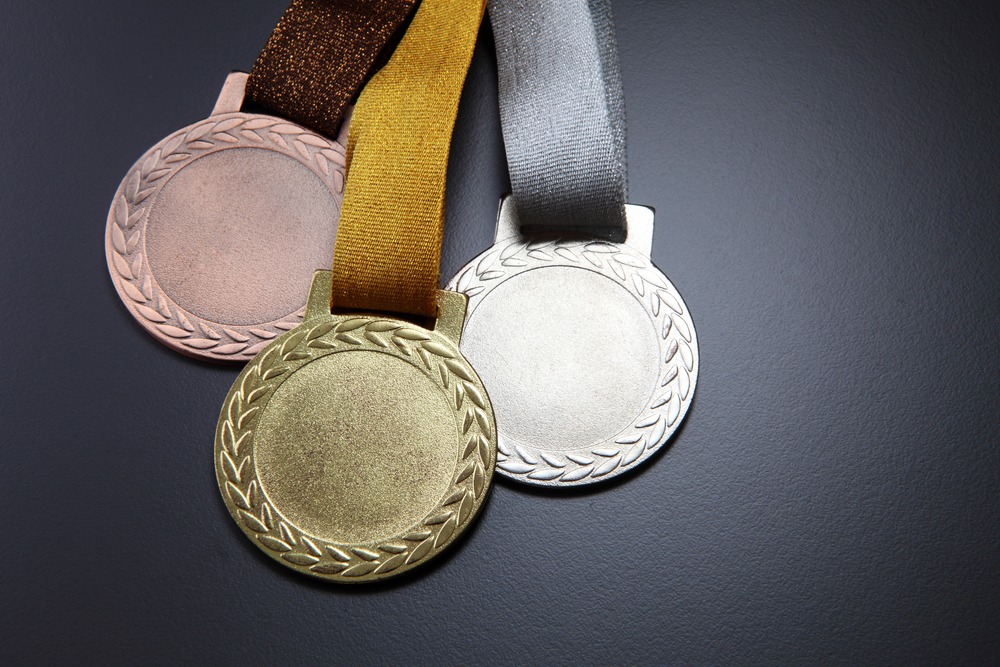
Tournament directors often assume that choosing between medal types is purely a budget decision. The manufacturing method determines not just cost but visual intricacy, surface detail, and the perceived quality of the finished medal: all of which affect how an athlete receives it.
We produce die-cast medals by pouring molten metal into a mold, allowing for deep, three-dimensional relief designs. They are the right choice when you want a medal that feels substantial and looks custom-designed rather than off-the-shelf. We press die-struck medals from flat metal using hardened dies, producing a cleaner, crisper surface with sharper edges: a look that reads as more formal and traditional. Printed medals use a digital or screen-printing process to apply color and detail, which works well for budget-conscious events that still want visual impact. For a 2nd place medal that an athlete will keep for years, die-cast or die-struck construction gives the medal a high-quality weight and finish that printed medals rarely match.
Ribbon selection is a decision most organizers underestimate. Details matter. Classic V-neck ribbons are the practical standard for field presentations: they drop over an athlete’s head quickly, hold the medal securely, and come in virtually any color combination to match your league’s branding. Drape ribbons, which hang from the shoulders, carry a more ceremonial weight and suit indoor medal ceremonies where the presentation is slower and more measured. Coordinating ribbon colors with your tournament’s color scheme sharpens the entire event’s visual identity. It signals that the organizers took the presentation seriously, and athletes notice. For more guidance on matching medal types to your event’s scale and format, the resource on choosing sports medals walks through the practical decision points clearly.
The base metal you choose shapes the medal’s feel before anyone reads the engraving:
- Zinc Alloy: Ideal for intricate, 3D custom designs that require a clean, modern finish and a substantial weight in the hand.
- Iron: A budget-friendly option that offers excellent durability and a traditional, heavy feel, well-suited for large-scale events ordering hundreds of medals.
- Brass: Provides a classic, prestigious look with excellent resistance to wear, making it a strong choice for prestigious school or club championships where the medal needs to last.
- Neck Ribbons vs. Drape Ribbons: Neck ribbons are the practical choice for active, on-field presentations; drape ribbons offer a traditional, formal look for indoor ceremonies where the presentation pace allows for it.
Designing Distinctive Awards for Winners and Runners-Up
A well-designed medal set makes the entire podium feel purposeful. When the gold, silver, and bronze medals share the same design language (same shape, same diameter, same typeface on the engraving), the differences in metal finish do all the work of communicating hierarchy without making the runner-up medals feel like afterthoughts. An athlete who receives a second-place medal that looks like it belongs to the same family as the champion gold understands that their finish was part of the same prestigious competition, not a separate, lesser event.
Personalized engraving is where a tournament medal becomes a keepsake. It captures the moment. Adding the event name, year, division, and placement to the back of each medal transforms a generic medal into a specific artifact tied to a specific moment. An athlete who finds that medal in a drawer ten years from now will know exactly which tournament it came from and what they accomplished there. Custom tournament logos on the front face extend that specificity further. They signal that this event had an identity, that it was organized and intentional, and that the organizers valued the experience enough to invest in it. For local school and youth sports events, that professional, big-league atmosphere changes how participants and families view the entire program.
Practical Award Ceremony Ideas for Schools and Youth Leagues
The medal ceremony is the last impression your tournament leaves on every athlete, coach, and family in attendance. Getting the order and presentation right takes about fifteen minutes of planning but creates memories that last considerably longer. Make it count.
- The Sequential Reveal: Present medals starting from third place, moving to second, and concluding with the first-place champions. The build creates genuine anticipation and ensures that bronze and silver finishers receive their own dedicated moment of recognition before you announce the champions.
- Individual Recognition: Announce each athlete’s name individually as they step onto the podium. This single change transforms a group photo opportunity into a personal moment: runners-up hear their name called in front of a crowd, which carries more weight than most organizers expect.
- Coaches’ Remarks: Encourage coaches to share a brief, specific highlight about the team’s journey to the finals before presenting the second-place medal. A coach who mentions a specific comeback game or a particular player’s improvement gives the medal a narrative that the metal alone cannot carry.
- The Podium Photo Op: Set up a dedicated photo backdrop where families can capture high-quality photos of the top three teams with their respective medals. Parents will use these photos for years; a clean backdrop and good lighting make the difference between a snapshot and a lasting memory.
Balancing Your Award Budget Without Sacrificing Quality
The concern about ordering distinct medals for multiple placements usually comes down to one question: does buying gold, silver, and bronze sets in separate quantities cost significantly more than a single medal type? With tiered bulk pricing, the answer is often no. When you combine your order across all three placements, the per-unit cost frequently drops to a lower tier than if you ordered each placement separately.
Discount Sports Rings structures pricing to reward quantity across the full order. For 1-19 Rings, the price is $8.50. Orders of 20-300 Rings drop to $7.50, with tiered pricing tiers: 20-99 at $7.50, 100-199 at $7.25, 200-299 at $7.00, 300-500 at $6.50, Xtra Bulk 500 – 999 at $6.00, and our bulk/tiered discount sample for 1000 + at $5.50. A tournament director ordering gold, silver, and bronze medals for a 32-team bracket can combine those quantities into a single order tier, keeping the per-unit cost at the lower end of the scale. Ordering a cohesive design set also simplifies the customization and shipping process: one order, one design approval, one delivery.
There is also a cost to not giving medals for second and third place, though it is harder to put on a spreadsheet. Athletes who feel you did not recognize their finish are less likely to register for next season’s tournament. For league commissioners managing registration numbers year over year, that attrition compounds quickly and quietly. Keep them playing.
Frequently Asked Questions About Placement Medals
What is the difference between a participation medal and a placement medal?
We award a participation medal to every player simply for registering and playing, regardless of final standings. Athletes earn a placement medal, including gold, silver, or bronze, by finishing in the top three positions of a competitive event. This recognizes specific athletic dedication and competitive effort rather than attendance.
Why is a second place medal traditionally silver?
The three-tiered system of gold, silver, and bronze reflects a long-standing athletic tradition that roots itself in the natural ranking of precious metals. Silver represents the runner-up position: a hard-earned finish that required an athlete or team to advance through the entire bracket all the way to the championship round.
How can we customize medals for a specific sports tournament?
Customization is simple. You can upload your league or tournament logo to feature on the front face of the medal, and add personalized engraving on the back: event name, year, division, and placement. Those details transform a standard medal into something specific to your event and your players.
What are the best ribbon options for youth sports medals?
For youth sports, classic V-neck ribbons are the most practical option. They are easy to place over an athlete’s head during a field presentation and come in a wide range of colors to match your league’s branding. For more formal academic or indoor ceremonies, drape ribbons offer a classic, prestigious look that suits the slower pace of an indoor presentation.
Can we order custom rings instead of medals for second place?
Yes. Many modern tournaments award championship rings to first-place winners and finalist rings to second-place finishers. This keeps the presentation highly prestigious and gives runners-up a substantial, memorable keepsake that differs meaningfully from the champion’s ring while still honoring the hard work of reaching the finals.
Every step on the podium represents hours of practice, dozens of competitive decisions, and a level of commitment that most people in the stands never fully see. Awarding distinct second- and third-place medals does not dilute the value of the championship; it honors the real competitive effort that made the championship worth winning in the first place. The finalists who pushed the champion to their limit deserve a physical record of that fight.
Discount Sports Rings is built to help organizers celebrate those moments affordably, with medals that feel as significant as the performances they represent. From our family to your team, we are here to make sure every athlete who earned a spot on the podium walks away with something worth keeping.
Ready to design an unforgettable medal experience for your players? Browse our selection or create your own! Discount Sports Rings: where every player’s hard work gets the recognition it deserves.